TheMagic5 Swimming Blog
Dive into the Action: Your Ultimate Guide to Understanding Elite Swimming
1 comment
nice blog
Rohith
August 18, 2025
nice blog
Have you ever found yourself glued to the screen, watching elite swimmers and thinking, “Wait, what just happened?”
As the World Aquatics Championships unfold in Singapore, we’re cheering on our TM5 athletes, Kasia Wasick and Rafael Miroslaw. But if you’re new to the world of competitive swimming, it can be a bit overwhelming!
To help you navigate the excitement, we’ve gathered answers to some of the most common questions that arise while watching these incredible athletes. Whether you’re a casual fan or just swim-curious, this guide is for you!
Swimmers often slap or shake their arms, legs, or shoulders right before stepping onto the blocks. It may look intense, but it’sactually a proven way to activate the muscles and nervous system. It increases blood flow and helps swimmers focus mentally. These pre-race routines vary by person—some jump, some bounce, and some use slaps as a 'go time' signal.
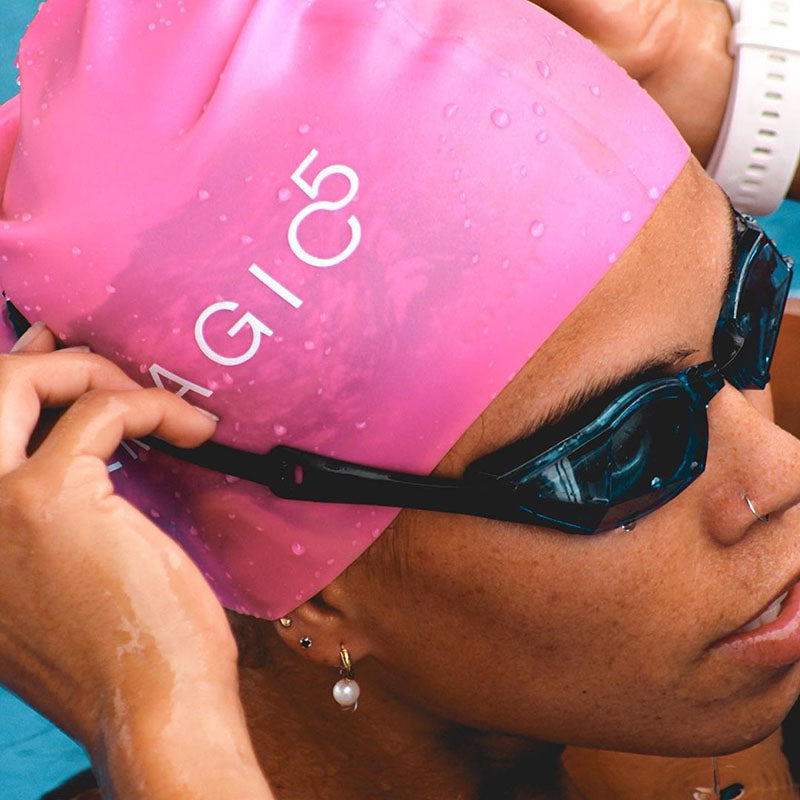
Wearing two swim caps isn’t about style—it’s about streamlining. The first cap, usually made of latex, holds the swimmer’s hair in place and helps keep goggle straps from shifting. The second cap, typically silicone, is smoother and creates a more hydrodynamic shape, reducing drag in the water. In sprint races, even a tenth of a second can make a difference, so double-capping can be a strategic advantage.
Once the official says 'Take your marks,' swimmers must remain absolutely still on the blocks. Even a small twitch could be considered a false start, leading to disqualification. This stillness builds tension, and you can often feel it as a spectator—it’s part of the drama of racing.
Unlike track athletes who can often sense their position, swimmers are mostly submerged and unable to see the competition clearly. Touchpads at the end of each lane stop the clock and record official times, but swimmers have to look up at the screen to confirm the results. That’s why there’s often a moment of suspense before celebration.
After diving in or turning at the wall, you’ll notice swimmers doing rapid, dolphin-like kicks underwater. This move, called underwater kicking, is faster than surface swimming. Swimmers are allowed to stay underwater for up to 15 meters—any further results in disqualification. This technique is especially critical in backstroke and butterfly events.
The colorful strips you see on swimmers’ shoulders, backs, or knees are kinesiology tape. It doesn’t improve performance directly, but it can offer support for tired or strained muscles, reduce pain, and promote blood flow. With the intense schedule of championship events, many swimmers use it as a recovery aid.
Most events begin with heats, where swimmers are divided into groups. The fastest times—regardless of heat—advance to the semi-finals or finals, depending on the event. In the final, it’s simple: whoever touches the wall first wins. Swimmers with the best qualifying times usually get the center lanes, which are considered optimal for competition.
Yes—but elite swimmers are particular about fit and performance. Most wear low-profile racing goggles that reduce drag and stay in place during powerful dives and turns. Custom-fit goggles like those from THEMAGIC5 are especially popular at this level for their secure, leak-proof seal. Both Kasia Wasick and Rafael Miroslaw wear THEMAGIC5 goggles when they compete.
You don’t need years of experience to enjoy competitive swimming. A little knowledge can enhance your viewing experience, helping you appreciate the strategy and skill involved.
Have more questions while watching? Reach out to us! We’re here to turn confusion into curiosity—one race at a time.
Limited edition
Select a product in the theme editor.
Please enter your Team Passcode below
From a quick smartphone scan, our internal AI analyzes your facial structure and determines the optimal fit, generating a custom design made only for you. Using specialized machine learning models, we transform your data into perfectly fitted swim goggles. Learn more here.
We offer standard and express shipping options.
USA (Shipped from New York)
Standard: 6-days
Express: 3-days
International (Shipped from New York)
Standard: 14-days*
Express: 3-5 days
*Applies to most countries, variations might apply locally. This will be shown at checkout.