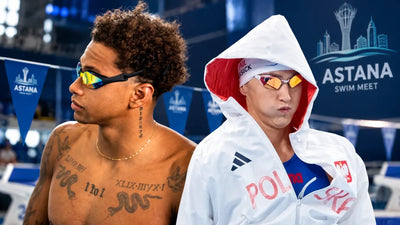
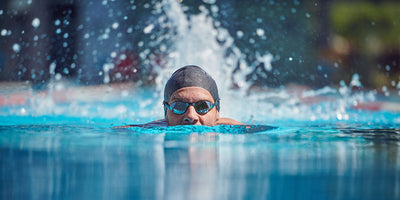
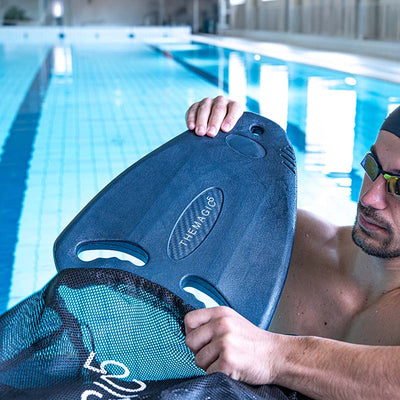
Racing goggles are generally designed for a secure, low-profile fit at speed, while training goggles usually prioritize comfort during longer sessions. The right choice depends on your face, swimming environment, session length, and whether you value maximum streamlining or extended comfort.
You do not necessarily need separate goggles for racing and practice. A well-fitting, versatile pair can work for both. However, understanding the differences can help you choose goggles that stay sealed, feel comfortable, and provide the visibility you need.
Should You Choose Racing or Training Goggles?
Choose racing goggles when you want a compact profile and a secure fit for starts, turns, and high-speed swimming. Choose training goggles when comfort, easy adjustment, and longer wear matter most.
For open-water swimming, prioritize a reliable seal, suitable lens tint, and enough visibility for sighting. For swimmers who struggle with standard goggle shapes, custom-fit goggles can offer another option for both training and competition.
Racing vs Training Goggles Comparison
| Feature | Racing goggles | Training goggles | Custom-fit goggles |
|---|---|---|---|
| Main purpose | Competition and speed-focused swimming | Daily practice and longer sessions | Training, racing, and swimmers who need a more personalized seal |
| Profile | Typically compact and low profile | Often slightly larger or more cushioned | Depends on the model, with fit created for the individual swimmer |
| Fit feel | Usually firmer and closer to the eyes | Usually softer and more forgiving | Gasket geometry is based on the swimmer's facial scan |
| Long-session comfort | Varies by model and face shape | Often designed for extended wear | Designed to reduce pressure caused by forcing a standard gasket to seal |
| Field of view | Varies by lens design | Often wider, but model-specific | Depends on the selected lens design |
| Adjustability | May use interchangeable bridges or compact hardware | Often provides familiar strap and bridge adjustment | Personalized gasket with strap adjustment |
| Best for | Meets, sprint work, and race-pace sessions | Lap swimming, drills, and aerobic sets | Swimmers seeking one secure and comfortable option across use cases |
These are general tendencies, not fixed rules. Some racing goggles provide wide peripheral vision, and some training goggles have streamlined designs. Always evaluate the specifications and fit of the exact model.
How Racing and Training Goggles Differ
Fit and seal
Racing goggles typically sit close to the face and use a compact gasket to help them remain stable during dives, turns, and fast swimming. Training goggles commonly use a softer or broader contact area to distribute pressure during longer sessions.
The category label matters less than the actual seal. Goggles should sit evenly around the eyes and remain secure without excessive strap tension. If you need to tighten the strap aggressively to stop leaks, the gasket shape or bridge spacing may not suit your face.
Comfort
Training sessions may keep you in the water much longer than a race. A small pressure point that feels acceptable for a few minutes can become distracting during repeated sets.
For frequent or long practices, prioritize a stable seal, comfortable gasket contact, and easy adjustment. For competition, choose a pair you have already tested during race-pace swimming and starts. Never rely on an untested pair on race day.
Profile and performance
Low-profile goggles are designed to sit close to the face and reduce unnecessary bulk. This can be useful in competitive swimming, particularly during starts, underwater phases, and sprint efforts.
Goggles are only one small part of swimming performance. Body position, streamline, technique, suit, cap, and a leak-free fit usually have a greater practical effect than the difference between two well-fitting goggle profiles.
Visibility
Field of view is determined by the individual lens and frame design, not only by whether a product is labeled for racing or training. Pool swimmers need clear views of lane lines and walls. Open-water swimmers also need to see buoys, other swimmers, and changing conditions.
Review the field-of-view specifications for the exact model. For example, some low-profile racing goggles are specifically designed to retain broad peripheral vision.
Which Goggles Are Best for Your Swim?
Sprint racing
For sprint races, select goggles that feel secure during dives and turns and sit comfortably close to the face. Test the goggles during race-pace sessions before competition. A low-profile design can be useful, but a reliable seal is the first requirement.
Long training sets
For long practices, prioritize comfort and consistency. Choose goggles that remain sealed without excessive strap pressure and that do not distract you during drills, aerobic work, or repeated intervals.
If racing goggles feel comfortable throughout your full session, you can use them for training. If they create pressure or persistent marks, keep them for shorter race-focused sessions and use a more comfortable pair for daily practice.
Open-water practice and triathlon
Open-water swimmers should prioritize a secure seal, appropriate lens tint, and visibility for sighting. Conditions can change during a swim, so choose a tint that gives enough protection without making buoys or other swimmers difficult to see.
Use goggles in open-water practice before race day. This lets you check the seal, tint, peripheral visibility, and strap security in realistic conditions.
Lens Tint Guide for Indoor Pools, Overcast Days, and Bright Sun
Lens tint is a separate decision from racing versus training fit. Choose it according to lighting and visibility.
| Lens tint | Best conditions | What to consider |
|---|---|---|
| Clear | Indoor pools, evening swims, and low light | Allows the most available light but offers less brightness reduction outdoors |
| Light tint | Indoor pools with bright lighting or mixed indoor conditions | Balances visibility with mild brightness reduction |
| Amber or contrast-enhancing tint | Overcast outdoor swims and variable light | Can improve perceived contrast, but performance varies by lens |
| Smoke or dark tint | Bright outdoor pools and sunny open water | Reduces brightness but may be too dark in cloudy or low-light conditions |
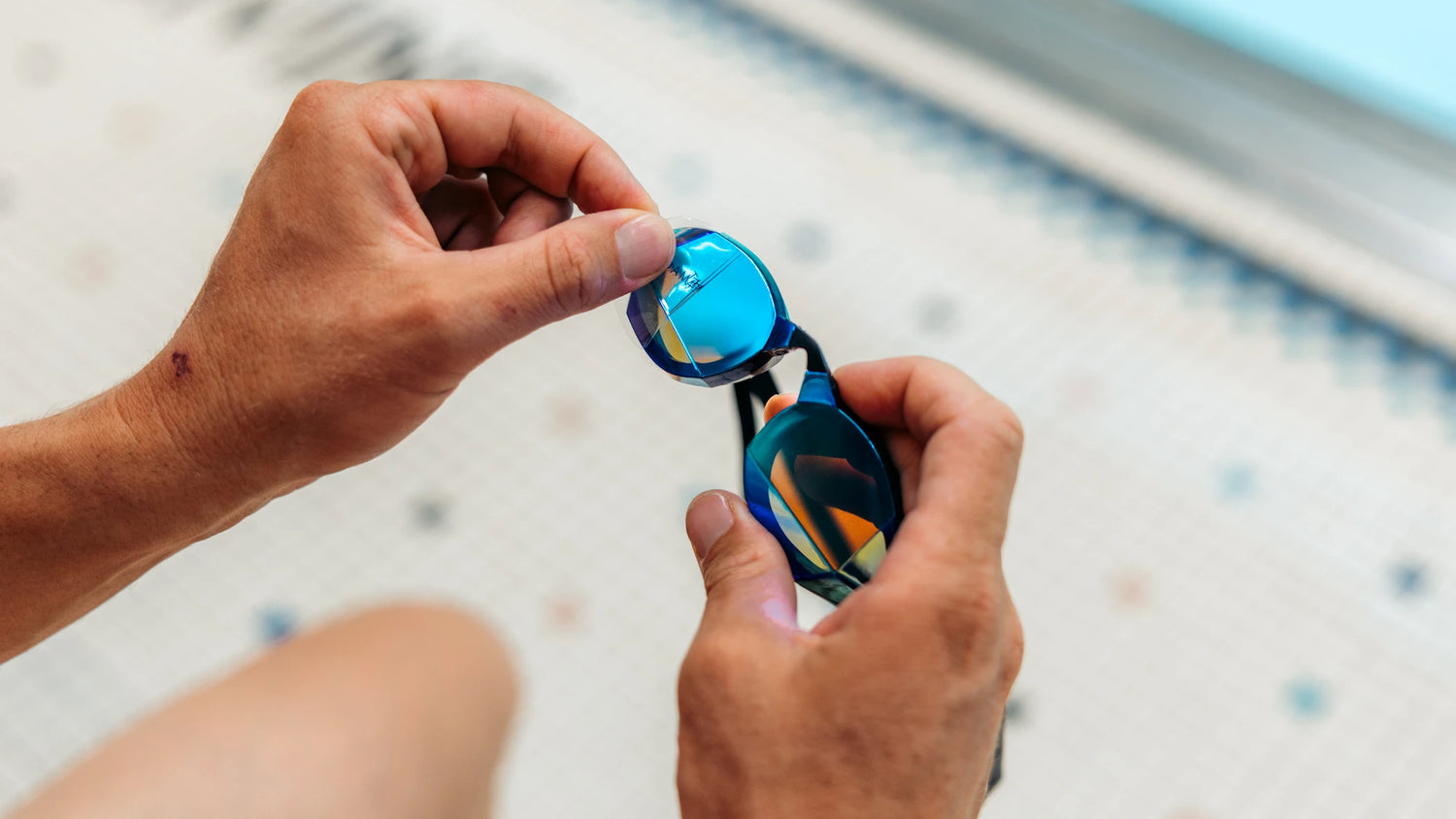
| Mirrored | Strong sunlight and reflective outdoor conditions | Helps manage bright light, but may reduce visibility when conditions become darker |
Check the manufacturer's description for the exact lens. Tint names and light-transmission properties can vary between products.
When Custom-Fit Goggles Make Sense
Standard goggles use a fixed set of gasket shapes and bridge options. That works well for many swimmers, but not every standard shape creates an even seal on every face.
THEMAGIC5 uses a smartphone facial scan and Optimal Fitting Technology to create custom gasket geometry for the individual swimmer. The goal is to produce a secure seal based on facial contours instead of relying on excessive strap pressure.
Custom-fit goggles may be worth considering if:
- standard goggles repeatedly leak despite careful adjustment;
- you experience uncomfortable pressure from forcing a standard gasket to seal;
- you want one pair for both regular training and competition;
- you need a dependable fit for pool, triathlon, or open-water swimming.
Custom fit does not remove the need to select the right lens for the environment or adjust the strap correctly. It addresses the shape of the seal, while lens tint and frame design address other parts of the swimming experience.
Can One Pair Work for Racing and Training?
Yes. One pair can work for both racing and training if it provides a secure seal, remains comfortable for the length of your sessions, stays in place during starts and turns, and has a suitable lens for your usual environment.
Two pairs may still be useful when you need different lens tints, want to preserve a tested competition pair, or prefer a softer design for long practices and a lower-profile option for race day.
How to Choose Between Racing and Training Goggles
Use this checklist before choosing:
- Start with fit. Look for an even seal without painful pressure or aggressive strap tightening.
- Match the session. Prioritize comfort for long practices and stability for racing and race-pace work.
- Check visibility. Make sure the lens design supports pool awareness or open-water sighting.
- Choose the lens tint. Use clear or light lenses in lower light and darker or mirrored options in bright conditions.
- Test before competition. Wear the goggles during starts, turns, and faster swimming before race day.
- Consider custom fit. If standard goggles regularly leak or create pressure, personalized gasket geometry may offer a better solution.
Frequently asked questions
What is the main difference between racing and training goggles?
Racing goggles generally prioritize a compact profile and stability at speed. Training goggles generally prioritize comfort and extended wear. Exact fit, visibility, and adjustability vary by model.
Do racing goggles reduce drag?
Low-profile racing goggles are designed to minimize unnecessary bulk. However, goggles represent only a small part of total swimming resistance. A secure, leak-free fit and good body position are more important for most swimmers.
Can I use racing goggles for everyday training?
Yes, if they remain comfortable throughout your sessions. If the gasket creates pressure or distracting marks during longer sets, a more comfort-focused training goggle may be a better daily option.
Can I race in training goggles?
Yes. A training goggle can be used for racing if it stays secure during starts and turns, provides clear vision, and is permitted by the event rules. Test it at race pace before competition.
When do custom-fit gaskets matter most?
Custom-fit gaskets are especially relevant when standard goggles repeatedly leak, require excessive strap tension, or create uneven pressure. They can also help swimmers who want a consistent seal across training and racing.
Which lens tint is best for indoor swimming?
Clear or lightly tinted lenses are usually the most practical choices for indoor pools because they preserve visibility in artificial or lower-light conditions.
Which lens tint is best for open water?
Use smoke or mirrored lenses for bright sun and clear or amber-style lenses for overcast or lower-light conditions. Choose enough protection for glare without making buoys and other swimmers difficult to see.
Do I need separate goggles for pool and open water?
Not always. One pair may work in both environments if the seal, visibility, and lens tint suit both. Swimmers often keep separate pairs when indoor and outdoor lighting conditions require different lenses.
Find the Right Fit for How You Swim
The best goggles are not simply the pair labeled for racing or training. They are the pair that seals reliably, stays comfortable, provides appropriate visibility, and supports the way you swim.
Explore THEMAGIC5 racing goggles, learn how to fit swimming goggles, or compare pool and open-water goggles before choosing your next pair.