What Swimwear Do Olympic Athletes Wear? A Guide to Elite Swim Gear
Jul 10, 2026
When you watch Olympic swimming, the athletes seem to be wearing almost nothing. A strip of fabric, a pair of goggles, a cap. Yet what they are wearing represents some of the most precisely engineered apparel in sport. Every seam, every fibre, every millimetre of coverage has been considered, tested, and optimised for one purpose: to move through water as fast as physically possible.
If you have ever wondered what swimwear Olympic athletes actually wear — in competition, in training, and why those two answers are very different — this is the guide you need.
There is no single answer to what an Olympic swimmer wears. The choice of suit depends on the event, the athlete's personal preference, and whether they are competing or training. At the elite level, three main suit categories define the landscape.
The racing brief is the most minimal competition suit available for male swimmers. It covers the hips and upper thigh, nothing more. Despite appearances, it is engineered to reduce drag, allow a full range of motion in the hip flexors and legs, and cause zero interference with the kick cycle.
Many of the world's greatest male swimmers have set world records in racing briefs. The suit's minimal surface area means minimal water resistance, and for events dominated by raw speed and technique — the 50m and 100m freestyle, the butterfly events — the brief remains the choice of elite athletes worldwide.
The jammer extends from the waist to mid-thigh and is the most common competition and training suit worn by male competitive swimmers. It offers slightly more compression across the quadriceps and hamstrings, which some swimmers find beneficial for muscle support during longer events.
Jammers are the dominant choice at both club and elite levels for training because they are durable, comfortable across long sessions, and versatile enough to move between training and competition use.
The tech suit is a different category entirely. These are high-performance race suits — bonded seams, hydrophobic fabrics, compression panels, and construction designed to reduce surface drag and improve hydrodynamic body position. They are worn exclusively in competition, never in training.
The reason is simple: tech suits are expensive, they degrade rapidly, and they are typically designed to last no more than 10 to 30 race uses. Every serious competitive swimmer knows that a tech suit does not belong at a Tuesday morning practice.
The swimsuit you wear on a beach holiday and the suit a competitive swimmer wears to an Olympic final share almost nothing beyond their general shape.
Performance swimwear is engineered around a specific problem: water is approximately 800 times denser than air. Every fraction of additional drag — from loose fabric, excess movement, or poor body position — directly translates to slower times. At the Olympic level, where hundredths of a second separate medals from fourth place, the suit is not an afterthought. It is part of the system.
The key properties that define performance swimwear include:
The underlying principle is the same across all categories of performance gear: the best equipment disappears. It does its job without announcing itself.
This is where the answer diverges sharply from what most people expect.
Olympic swimmers do not train in tech suits. They train in racing briefs, swimsuits and jammers — the same styles available to club and competitive swimmers at every level. The tech suit is preserved for race day. Day in, day out, the world's fastest swimmers put in their metres in the same suit types that any serious lap swimmer uses.
The priority for a training suit is different from a race suit. Where a race suit maximises performance for a single event, a training suit needs to:
For Olympic swimmers, the racing brief, swimsuit and the jammer are the established training standards. The choice between them typically comes down to personal preference and training focus — briefs for maximum movement freedom and minimal distraction, jammers for slightly more coverage and muscle support during high-volume sets.
If you watched the Beijing Olympics in 2008, you may remember something different about the swimwear. That year, the world of competitive swimming was dominated by full-body polyurethane suits — suits that covered swimmers from neck to ankle and used buoyant, water-repellent materials that artificially altered body position and reduced drag far beyond what textile fabric could achieve.
The results were extraordinary and controversial in equal measure. At the 2009 World Championships in Rome, 43 world records were broken — a number that made it impossible to attribute performance to training alone.
World Aquatics (then known as FINA) banned polyurethane and neoprene suits in 2010. Under the current regulations, male competition suits cannot extend above the navel or below the knee, and all suits must be made from textile-only fabrics. The goal was straightforward: return the sport's performances to a measure of athletic ability rather than equipment advantage.
Since the ban, world records have fallen more gradually, and the racing brief and jammer have re-established themselves as the dominant forms of elite male competition swimwear.
Performance swimwear is not a marketing label. It describes a specific category of suit designed for competitive use rather than recreational or casual swimming.
The distinction matters because not all swimwear sold at sporting goods stores is genuinely performance-oriented. A suit described as performance swimwear for competitive use should offer:
For serious lap swimmers, club competitors, and triathletes, choosing the right training suit is a practical decision that affects both comfort and consistency across a season of training.
At the elite level, the margin between winning and not making the podium is often measured in hundredths of a second. Swimmers at that level cannot afford gear that distracts, leaks, fogs, or moves when it should not.
This is the principle behind THEMAGIC5's approach to swim goggles. THEMAGIC5 uses AI-driven OFT (Optimal Fitting Technology) — a scan of the athlete's facial structure that generates a custom-fit goggle made specifically for that face. No two goggles are identical. No two faces are identical.
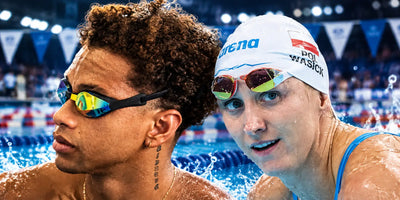
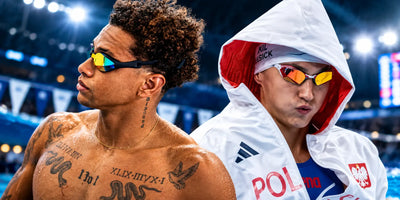
That approach has attracted some of the world's fastest swimmers to the THEMAGIC5 athlete team. Ilya Kharun — NCAA Champion and double Olympic bronze medallist in the 100m and 200m butterfly — trains and competes in THEMAGIC5 goggles. His experience reflects what the technology is designed to deliver:
"When I first tried the goggles, I didn't know what to expect but once I got in the water, I was surprised by how clear they are and how well they actually fit my eyes. They're a brand that adapts and creates equipment that really suits you." — Ilya Kharun
Matt Grevers, six-time Olympic Medalist for the USA, has articulated the same philosophy from a different angle: "It is the small things, the 5%, that make the world of difference."
Kasia Wasick, who represented Poland across four Olympic Games — 2008, 2012, 2016, and 2021 — and is the world's second-fastest female 50m freestyle swimmer, is another member of the THEMAGIC5 athlete team.
What these athletes share is not just speed. It is a requirement that every piece of their equipment performs with the same precision they bring to the water. Gear that is made specifically for your body does not just fit better — it stops being something you think about at all.
That is the standard THEMAGIC5 builds toward: custom-fit swim goggles that disappear from your awareness the moment you push off the wall.
Male Olympic swimmers typically wear either racing briefs (sometimes called competition briefs or "Speedos") or jammers, which extend to mid-thigh. For race day, many also wear a tech suit over or instead of a brief. The choice depends on personal preference, event type, and national federation rules.
World Aquatics (formerly FINA) banned full-body polyurethane and neoprene swimsuits in 2010 following widespread controversy that the suits provided artificial buoyancy and performance advantages beyond athlete ability. Since then, suits must be made from textile-only fabrics and must not cover the shoulders or extend past the knee for male swimmers.
Most Olympic-level male swimmers wear racing briefs or jammers during training. Tech suits (race suits) are expensive, degrade quickly, and are reserved exclusively for competition. Training in briefs or jammers allows full range of motion and helps maintain technique awareness.
A tech suit is a high-performance competition swimsuit engineered with bonded seams, compression panels, and hydrodynamic fabrics to reduce drag and improve body position. They are worn exclusively in competition, not in training, due to their cost and limited lifespan (typically 10–30 races).
Recreational and club swimmers can wear the same styles as Olympic athletes — racing briefs and jammers are widely available. However, elite-level tech suits are typically restricted by cost and event regulations for amateur-level competition.
Yes. All competitive swimmers, including Olympians, wear goggles in both training and competition. At the elite level, a secure, leak-free goggle fit is non-negotiable — leaking or shifting goggles during a race cost concentration and time. THEMAGIC5's Vector goggles use AI-based OFT Technology to create a custom fit for each swimmer's face. They are worn by Olympic athletes including Ilya Kharun and Kasia Wasick.
Please enter your Team Passcode below
From a quick smartphone scan, our internal AI analyzes your facial structure and determines the optimal fit, generating a custom design made only for you. Using specialized machine learning models, we transform your data into perfectly fitted swim goggles. Learn more here.
We offer standard and express shipping options.
USA (Shipped from New York)
Standard: 6-days
Express: 3-days
International (Shipped from New York)
Standard: 14-days*
Express: 3-5 days
*Applies to most countries, variations might apply locally. This will be shown at checkout.