Why do Swimmers have Broad Shoulders?
Written byNiklas Hedegaard
Nov 5, 2025
Have you ever noticed that many swimmers have broad, well-defined shoulders? It's one of the most recognizable physical traits among competitive swimmers, leading many people to wonder why swimmers have broad shoulders and whether swimming actually changes the shape of your body.
The short answer is yes, but not in the way many people think.
Swimming develops the muscles of the shoulders, upper back, and chest through years of training against water resistance. Combined with low body fat, strong posture, and consistent training, these adaptations create the broad-shouldered, V-shaped swimmer's body and athletic swimming physique commonly associated with swimmers. Genetics also plays an important role, which is why not every swimmer develops the same body shape.
Whether you're training for fitness or competing at a high level, understanding why swimmers have broad shoulders can help you set realistic expectations and appreciate how swimming shapes the body over time.

One of the biggest misconceptions is that swimming permanently widens your shoulder bones. In reality, swimming does not increase bone width in adults. Instead, it develops the muscles surrounding the shoulders, making them appear broader and stronger.
Over time, regular swim training increases muscle size in the upper body, particularly the deltoids, latissimus dorsi (lats), trapezius, and chest muscles. As these swimming muscles become stronger, they create the appearance of wider shoulders while contributing to the athletic V-shaped physique many swimmers are known for.
Body composition also plays a role. Competitive swimmers typically maintain lower body fat percentages through consistent training, allowing shoulder and back muscles to become more defined. This combination of muscle development, lean body composition, and ongoing shoulder development makes the shoulders appear even broader.
For younger athletes who begin swimming before adulthood, natural growth and genetics may contribute to shoulder width as they mature. However, swimming itself primarily develops muscle rather than changing skeletal structure.
Swimming is unique because every stroke requires you to move your arms through water, which provides continuous resistance in every direction. Unlike lifting a weight for a few repetitions, swimmers perform thousands of arm movements during training sessions, creating consistent muscular demand on the upper body.
This repetitive resistance encourages muscle growth and endurance while improving shoulder stability, mobility, and overall upper body strength. Over months and years of training, these adaptations become more noticeable, especially in swimmers who train several times per week.
Some of the key factors that contribute to broader shoulders include:
Unlike many gym exercises that target individual muscles, swimming trains multiple muscle groups simultaneously. This coordinated movement, combined with proper swimming technique, is one reason swimmers develop functional strength alongside their distinctive physique.
Swimming works nearly every major muscle in the upper body, but several muscle groups play a particularly important role in creating broader-looking shoulders across different swimming strokes.
The deltoids are the primary shoulder muscles and are heavily involved in every swimming stroke. They help lift, rotate, and stabilize the arms during each pull through the water. Well-developed deltoids contribute significantly to the rounded appearance of a swimmer's shoulders.
Often called the "lats," these large back muscles generate much of the pulling power used in freestyle, butterfly stroke, and backstroke. Strong lats create the wider upper-body appearance that contributes to the classic swimmer's V-shaped physique.
The trapezius muscles support shoulder movement and help stabilize the upper back and neck. They play an important role during powerful pulling motions while maintaining good posture in the water.
Although smaller than the other muscle groups, the rotator cuff muscles are essential for shoulder stability and injury prevention. Healthy rotator cuff muscles help swimmers perform thousands of repetitive arm movements safely throughout training.
The chest muscles assist with pulling and pushing movements, particularly during butterfly stroke and breaststroke. Together with the shoulders and back, they contribute to overall upper body strength and efficient swimming mechanics.

Every swimming stroke engages the shoulders, but some place greater demands on the upper body than others. The variety of swimming strokes helps develop balanced strength while improving mobility, endurance, and overall shoulder development.
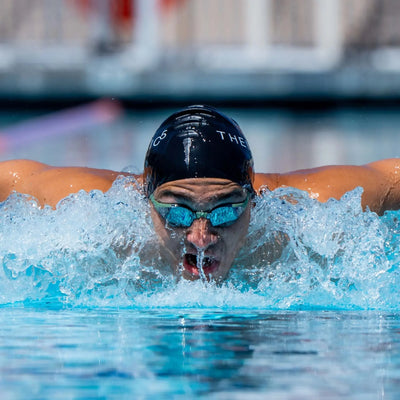
The butterfly stroke is often considered the most demanding stroke for shoulder development. The simultaneous arm recovery and powerful pulling motion require significant strength from the deltoids, trapezius, chest, and latissimus dorsi. Because of its intensity, butterfly is particularly effective for building upper body strength.
Freestyle is the most commonly practiced stroke, making it a major contributor to shoulder development. The continuous overhead arm rotation and pulling motion repeatedly engage the shoulders and back. Over thousands of strokes during training, these muscles gradually become stronger and more defined.
Although performed on the back, backstroke still requires consistent shoulder rotation and pulling power. It emphasizes the rear deltoids and upper back muscles while helping improve posture, mobility, and shoulder stability.
Breaststroke relies more heavily on the chest and hips than other strokes, but the shoulders still play an important role in generating power and maintaining stability throughout each stroke cycle.
Because competitive swimmers typically train using all four swimming strokes, they develop balanced upper-body strength rather than overworking a single muscle group.
Swimming can build stronger, more defined shoulders, but genetics also influence how broad someone's shoulders appear.
Your natural bone structure, muscle-building potential, and body composition all affect your swimming physique. Some people naturally have wider clavicles (collarbones), giving them a broader frame before they ever enter the pool. Others may develop noticeable shoulder muscles through training even if their overall frame is smaller.
This is why two swimmers with similar training schedules can look very different.
Consistent swim training develops the muscles around the shoulders, back, and chest, while genetics determine your overall body structure and how easily you gain muscle. In most cases, the broad-shouldered appearance associated with swimmers results from a combination of both factors rather than one alone.
Elite swimmers typically combine years of structured training, proper nutrition, and favorable genetics, which is why their shoulder development is often more pronounced than recreational swimmers.
Broad shoulders are more than a recognizable physical feature. They contribute directly to swimming performance and overall athletic ability.
Some of the key benefits include:
Combined with proper swimming technique, strong shoulders make every stroke more efficient while reducing unnecessary energy loss.

Yes, but expectations should be realistic.
Swimming regularly can strengthen and define the shoulders for swimmers of all experience levels. However, developing the broad shoulders often seen in elite athletes typically requires years of consistent training, progressive workouts, and proper nutrition.
If your goal is to build stronger shoulders through swimming, focus on:
Even if your shoulders don't become dramatically wider, you'll still benefit from increased upper body strength, improved posture, better endurance, and overall fitness.
As your training volume increases, having equipment that fits properly becomes just as important as building strength. Leaky or uncomfortable goggles can become a distraction during longer swim sessions, making it harder to stay focused on your swimming technique.
Custom-fit swim goggles are designed to provide a secure, leak-free fit based on the unique shape of your face, helping you stay comfortable whether you're swimming laps for fitness or preparing for competition. Explore our Custom Swim Goggles collection to find your ideal fit, or browse TheMagic5 Goggles to see how a personalized fit can improve comfort during training. For more training tips, read our guide to the 6-1-6 Swim Drill to build better balance, body position, and stroke efficiency.
Swimming places continuous water resistance on the upper body through every stroke, encouraging muscle development in the shoulders, back, and chest. Running primarily targets the lower body, so it doesn't produce the same upper-body adaptations.
Swimming does not permanently widen shoulder bones in adults. Instead, it develops the muscles around the shoulders, creating the appearance of a broader upper body.
The butterfly stroke generally places the greatest demand on the shoulders because it requires powerful, simultaneous arm movements. Freestyle also contributes significantly due to the high number of repetitive strokes performed during training.
Yes. Beginners can improve shoulder strength and muscle definition with consistent swim training, although the rate of development depends on factors such as training frequency, nutrition, genetics, and overall shoulder development.
Broad shoulders can improve leverage, shoulder stability, and pulling power, all of which contribute to more efficient swimming. However, proper swimming technique, endurance, and consistent training remain the most important factors for success.
The answer to why swimmers have broad shoulders comes down to years of consistent training, muscle development, and the unique challenge of water resistance. Swimming strengthens the shoulder muscles, back, and chest while improving upper body strength, creating the athletic swimmer's body and balanced swimming physique commonly seen in competitive athletes.
While genetics influence your natural frame, consistent swim training plays a major role in building stronger, more defined shoulders. Whether you're swimming recreationally or competing at a high level, focusing on proper swimming technique, regular practice, and the right equipment can help you become a stronger, more efficient swimmer both in and out of the water.
Select a product in the theme editor.
Please enter your Team Passcode below
From a quick smartphone scan, our internal AI analyzes your facial structure and determines the optimal fit, generating a custom design made only for you. Using specialized machine learning models, we transform your data into perfectly fitted swim goggles. Learn more here.
We offer standard and express shipping options.
USA (Shipped from New York)
Standard: 6-days
Express: 3-days
International (Shipped from New York)
Standard: 14-days*
Express: 3-5 days
*Applies to most countries, variations might apply locally. This will be shown at checkout.