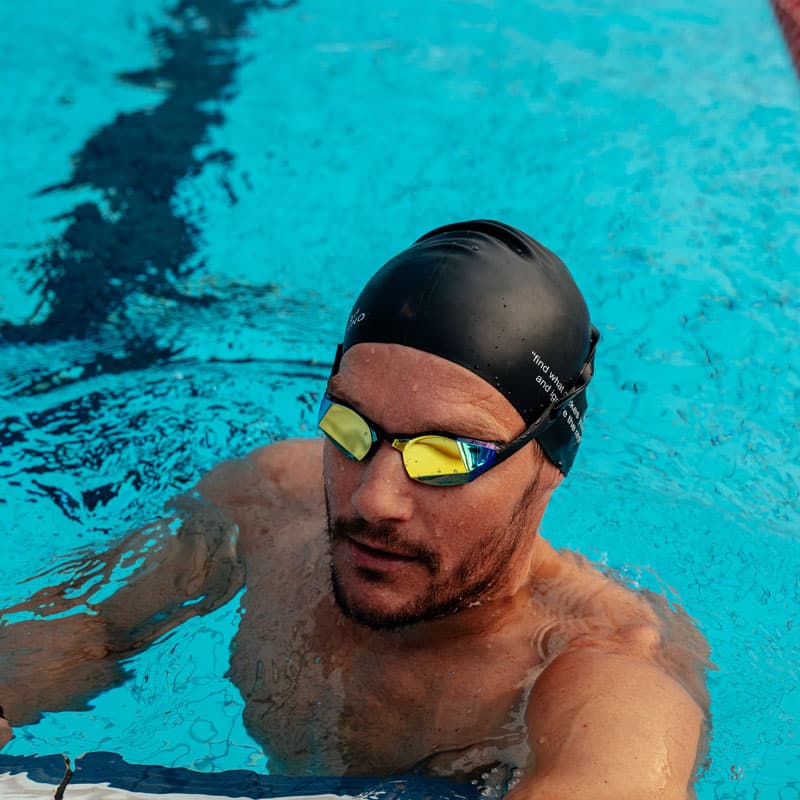
It’s a new year, and there’s a good chance you’ve got a race on the calendar. Now is the perfect time to build high-cadence control into your swim. Use winter pool sessions to practice short, deliberate cadence surges so that, when race day brings waves or a crowded pack, you can confidently switch gears, hold position, and stay on line.
Train the skill now—cash it in when the season starts.
Why does higher cadence swimming help?
- Stability: Shorter, quicker strokes reduce time exposed to side forces from waves.
- Drive through turbulence: Faster rhythm punches through broken water.
- Positioning: Brief surges close gaps, get on feet, or clear congestion.
- Breathing flexibility: Quicker turnover supports 2-stroke breathing when needed.
When to increase stroke rate
- Entering/exiting surf and in persistent surface chop.
- During pack accelerations, post-buoy turns, or after sighting to correct line.
- Any time your hand entry is getting knocked off-line or glide feels “sticky.”
How can I implement this?
- Speed up turnover, not slip: Keep a firm catch and clean finish.
- Slightly shorten the front-end glide; keep the back-end push.
- Steady, compact 4–6 beat kick for stability.
- Use 2-stroke breathing temporarily; return to bilateral when calm.
How can I count my cadence?
- Base: Many triathletes cruise at 60–70 SPM in calm water.
- Surge: Add 8–15 SPM for 20–90 seconds, then reassess.
- Tools: Tempo trainer/smartwatch, or count strokes per breath/sight as a mental metronome.
Pool practice when it’s cold
- Stroke-rate ladders: 6–8×75 as 50 at base + 25 at +8–12 SPM. Focus on catch quality.
- Sight-and-surge: 8×50 with 1–2 low-lift sights on the first 25, surge cadence on the second 25.
- Pack simulation: Swim in line with 3–5 teammates, rotating leaders; add 10–15 high-cadence strokes after each wall to mimic buoy traffic.
- Cadence pyramids with a tempo trainer: 4×(4×50) at base, +6, +10, +6 SPM; 15–20 seconds rest.
Keep In Mind For Race Day!!
- Situational surges: Use higher cadence honestly—short, purposeful bursts when waves or packs demand it. Don’t sit at sprint cadence for the whole swim.
- Settle strategy: Once conditions stabilize, return to your efficient base cadence to conserve energy for the bike and run.
Gear notes from THEMAGIC5
- Visibility and fit: In chop and packs, clear sighting is crucial. Custom-fit goggles reduce leaks and pressure points when waves hit or when contact happens in tight groups.
- Lens choice: Consider mirrored or smoke lenses for glare on bright days, and lighter tints for low light. Stable seals and anti-fog help keep sighting crisp during high-cadence surges.
Bottom Line
High-cadence freestyle is a skill, not just a fitness test. Practice deliberate rhythm changes, preserve your catch, and use surges as tactical tools. When the weather’s cold, the pool can mimic open-water chaos with the right drills and cadence training. Nail this, and you’ll stay fast, stable, and smart through waves and packs—exactly where you want to be on race day.